
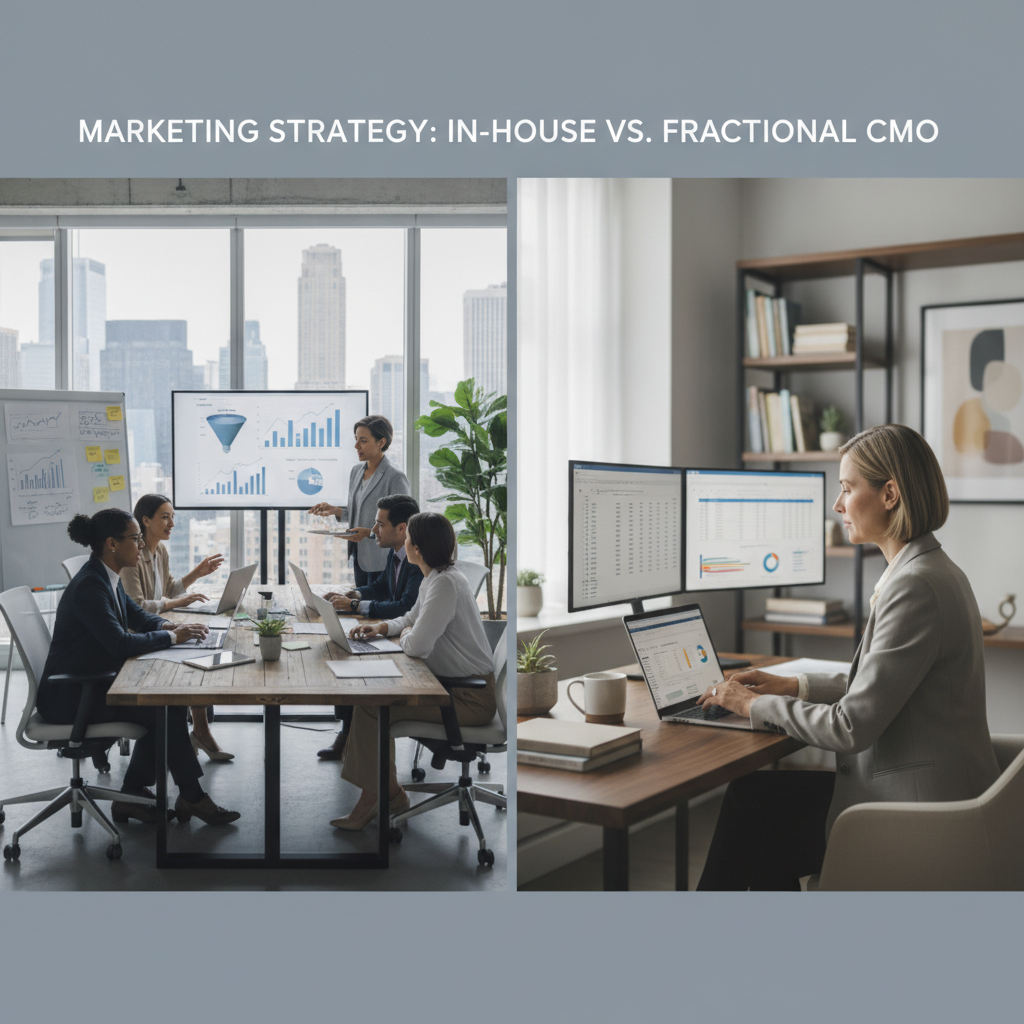
Navigating the world of marketing leadership can be a complex journey for online businesses. Whether you’re a small business owner, a developer launching a SaaS platform, or a founder scaling your digital presence, one of the most important decisions you’ll face is how to choose between in-house marketing and a fractional CMO. Both options offer unique advantages and challenges, and the right choice can dramatically impact your growth trajectory, resource allocation, and long-term brand success. In today’s fast-paced digital landscape, understanding the nuances between building an internal marketing team and leveraging the expertise of a seasoned fractional CMO is more critical than ever. This guide will walk you through the key considerations, benefits, and potential pitfalls of each approach, empowering you to make an informed decision that aligns with your business goals. Whether you’re looking to scale efficiently, optimize your marketing spend, or access high-level strategic insight without a full-time commitment, this article will provide the clarity you need to move forward confidently.
How to Choose Between In-House Marketing and a Fractional CMO
The decision of how to choose between in-house marketing and a fractional CMO is one that can shape the future of your online business. In-house marketing involves building and managing your own team of marketing professionals who are dedicated solely to your brand. This approach offers full control, immediate collaboration, and a deep understanding of your company culture. On the other hand, a fractional CMO brings experienced executive-level marketing leadership on a part-time or contract basis, offering strategic direction without the overhead of a full-time executive.
When evaluating these options, consider your business’s current stage, budget, and growth objectives. In-house teams are ideal for companies that require hands-on execution and daily collaboration, while a fractional CMO is perfect for organizations seeking high-level strategy, access to a broad skill set, and flexibility. The key is to assess what your business needs most: deep integration and control, or strategic expertise and scalability.
For a detailed look at how to choose between in-house marketing and a fractional cmo, check out this comprehensive video guide that breaks down the pros and cons of each path.
Ultimately, the right choice depends on your unique goals, resources, and the complexity of your marketing needs. By understanding the core differences, you can align your decision with your business vision and set the stage for effective growth.
Unlocking Growth: Benefits of Choosing the Right Marketing Leadership
Choosing the right marketing leadership model can unlock significant growth for your business. When you select the best fit between in-house marketing and a fractional CMO, you position your company to maximize resources, drive innovation, and accelerate results. In-house teams excel at brand immersion and rapid response to internal needs, making them ideal for businesses with complex products or a need for constant campaign adjustments. Their proximity allows for seamless communication and a unified company culture.
Fractional CMO services, however, bring a wealth of outside experience and a strategic, results-driven mindset. These leaders have often worked across various industries and business models, equipping them to spot opportunities or risks that an internal team might overlook. They can implement best practices, introduce advanced analytics, and connect your business to a wider network of partners and vendors. For many online businesses, this means faster scaling, smarter budgeting, and greater agility in a rapidly changing market.
If you’re considering fractional CMO services, weigh the potential for fresh perspectives, specialized expertise, and executive-level leadership at a fraction of the cost of a full-time CMO. This model is especially beneficial for companies in transition, startups preparing for funding rounds, or established brands seeking to revamp their marketing strategy without long-term commitments.
The benefits of choosing the right marketing leadership extend beyond immediate campaign success. They shape your company’s ability to innovate, adapt, and thrive in a competitive digital environment. By carefully evaluating your needs and the strengths of each model, you can set the foundation for sustainable growth and long-term success.
How to Decide: Key Factors When Choosing In-House or Fractional CMO
When it comes to how to choose between in-house marketing and a fractional CMO, several key factors should guide your decision. First, assess your current marketing challenges and long-term business goals. Are you struggling with strategic direction, or do you need more hands-on execution? In-house teams are well-suited for brands that require daily management, close collaboration, and a deep understanding of company culture. However, they demand significant investment in recruitment, training, and ongoing management.
A fractional CMO, by contrast, is ideal for businesses that need high-level strategic guidance but are not ready or able to commit to a full-time executive salary. This model provides access to seasoned marketing leadership, often at a lower cost, and can be scaled up or down as your needs evolve. Fractional CMOs can quickly identify gaps, set priorities, and implement processes that drive measurable results.
Before making a decision, review this helpful resource: 5 Things That You Must Do Before Hiring a Fractional CMO. It outlines practical steps to ensure you’re prepared to get the most from your investment.
Other factors to consider include your marketing budget, the complexity of your product or service, and your desired speed of execution. Evaluate whether your organization is ready to manage an internal team or if you’d benefit more from the flexibility and expertise of a fractional CMO. By weighing these elements, you can make a confident, informed choice that aligns with your business’s unique needs.
Understanding In-House Marketing: Pros, Cons, and Best Fits
In-house marketing means building a dedicated team that works exclusively for your business. This approach allows for deep brand immersion, quick communication, and seamless collaboration across departments. For online businesses with complex products, a need for rapid campaign adjustments, or a strong emphasis on company culture, in-house marketing can be a powerful asset.
The advantages of in-house marketing include:
- Total control over messaging and brand voice
- Immediate access to team members for brainstorming and execution
- Alignment with company culture and long-term vision
However, there are challenges to consider. Recruiting top marketing talent can be time-consuming and expensive. Maintaining a full team requires ongoing investment in salaries, benefits, and training. In-house teams may also develop tunnel vision, missing out on fresh perspectives and industry best practices.
The best fit for in-house marketing is typically a business with the resources to invest in talent, a need for constant campaign management, and a desire for full control over its marketing efforts. If your business values deep integration and long-term team development, this approach may be ideal.
What Is a Fractional CMO? Roles, Responsibilities, and Value
A fractional CMO is a marketing executive who works with your business on a part-time or contract basis, providing high-level strategic leadership without the commitment of a full-time hire. Fractional CMOs typically have years of experience across multiple industries and bring a fresh, objective perspective to your marketing strategy.
The key responsibilities of a fractional CMO often include:
- Developing and executing comprehensive marketing strategies
- Aligning marketing initiatives with business objectives
- Mentoring internal teams and upskilling staff
- Optimizing marketing budgets and measuring ROI
- Introducing best practices and new technologies
The value of a fractional CMO lies in their ability to deliver executive-level insight and leadership at a fraction of the cost of a full-time hire. This model is ideal for online businesses that need strategic direction, are entering new markets, or are preparing for rapid growth. By leveraging a fractional CMO, you gain access to a wide network, advanced tools, and proven methodologies that can accelerate your marketing success.
Comparing Costs: In-House Marketing vs. Fractional CMO
One of the most significant factors in how to choose between in-house marketing and a fractional CMO is cost. Building an in-house marketing team requires investment in salaries, benefits, office space, and ongoing training. The cost can quickly add up, especially if you need specialists in areas like SEO, content, design, and analytics. Additionally, recruiting and onboarding new team members can be time-consuming and expensive.
A fractional CMO, on the other hand, typically works on a retainer or project basis. This means you only pay for the expertise and time you need, without the overhead of a full-time executive. Fractional CMOs often bring a network of trusted vendors and partners, potentially reducing costs further by streamlining processes and negotiating better rates.
To help visualize the cost comparison, here’s a breakdown:
| Cost Factor | In-House Marketing | Fractional CMO |
|---|---|---|
| Salaries & Benefits | High (multiple team members) | Lower (part-time executive) |
| Recruitment Costs | Significant | Minimal |
| Training & Development | Ongoing | Included in expertise |
| Tools & Software | Often required | Often provided or recommended |
| Flexibility | Lower | High |
By understanding the true costs of each approach, you can make a more informed decision that aligns with your business’s financial goals and growth plans.
Scalability and Flexibility: Adapting to Business Needs
Scalability and flexibility are crucial when deciding how to choose between in-house marketing and a fractional CMO. Online businesses often experience rapid changes in demand, requiring marketing strategies that can adapt quickly. In-house teams may struggle to scale up or down efficiently, as hiring and training new staff takes time and resources. Conversely, a fractional CMO offers the ability to adjust engagement levels as your business evolves, providing more or less support depending on your needs.
Fractional CMOs can quickly step in to lead major initiatives, launch new products, or guide your business through periods of transition. When the need for executive leadership decreases, you can scale back their involvement without the complexities of layoffs or restructuring. This flexibility is especially valuable for startups, seasonal businesses, or companies in growth mode.
In-house teams offer consistency and long-term stability, which can be beneficial for businesses with steady marketing demands. However, their ability to pivot rapidly is often limited by headcount and internal processes. By weighing your company’s need for adaptability against the benefits of a stable internal team, you can select the model that best supports your growth trajectory.
Access to Expertise and Innovation
Access to cutting-edge expertise and innovative strategies is another key consideration in how to choose between in-house marketing and a fractional CMO. In-house teams can develop deep knowledge of your brand, product, and customer base, but they may lack exposure to the latest industry trends or advanced marketing technologies. Over time, this can lead to stagnation or missed opportunities for growth.
Fractional CMOs are typically seasoned professionals who stay current with the latest tools, platforms, and best practices. They bring a wealth of experience from working with diverse clients and industries, allowing them to introduce fresh ideas, innovative campaigns, and data-driven decision-making. This outside perspective can be invaluable for businesses looking to break through plateaus or enter new markets.
When evaluating your options, consider whether your business would benefit more from the continuity of an in-house team or the cross-industry expertise of a fractional CMO. Both models have their strengths, and the right choice will depend on your company’s current capabilities and future ambitions.
Culture, Collaboration, and Company Alignment
Company culture and collaboration play a significant role in how to choose between in-house marketing and a fractional CMO. In-house teams are immersed in your brand’s values, mission, and day-to-day operations. This deep integration often leads to stronger alignment, faster communication, and a sense of shared purpose among team members. For businesses that prioritize culture and internal collaboration, an in-house team can be a powerful asset.
However, a fractional CMO can also foster alignment by bringing objective, high-level perspective to your marketing strategy. While they may not be present in the office every day, effective fractional CMOs prioritize communication and work closely with internal stakeholders to ensure their strategies reflect your company’s goals and values. They can also bridge gaps between departments, mentor existing staff, and introduce new processes that enhance collaboration across the organization.
Ultimately, the best choice depends on your company’s culture, communication style, and openness to external leadership. By understanding how each model impacts collaboration and alignment, you can choose the approach that best fits your team dynamics and business objectives.
Making the Transition: Steps for a Smooth Changeover
If you decide to switch from in-house marketing to a fractional CMO, or vice versa, planning a smooth transition is essential. Start by clearly defining your goals, expectations, and success metrics for the new arrangement. Communicate openly with your team about the reasons for the change and how it will impact their roles and responsibilities.
For businesses moving to a fractional CMO, ensure that all relevant data, processes, and access are documented and shared. Set up regular check-ins to review progress and address any challenges early. If you’re transitioning to an in-house team, invest in thorough onboarding and training to help new hires integrate quickly and effectively.
Regardless of the direction, prioritize transparency, open communication, and a clear roadmap for the first 90 days. This will help minimize disruptions and ensure your marketing efforts continue to drive results during the transition period.
Common Pitfalls and How to Avoid Them
While both in-house marketing and fractional CMOs offer unique advantages, there are common pitfalls to watch out for. For in-house teams, the risk of groupthink, skill gaps, and resource constraints can limit creativity and effectiveness. Businesses may also underestimate the ongoing costs of recruitment, training, and retention.
With fractional CMOs, the biggest challenges often involve integration and alignment. If the CMO isn’t given sufficient access to information or decision-makers, their impact may be limited. Additionally, unclear expectations or lack of internal support can hinder the success of a fractional engagement.
To avoid these pitfalls, set clear goals, maintain open communication, and regularly review progress against agreed-upon metrics. Invest in ongoing training for in-house teams and ensure fractional CMOs are fully integrated into your leadership structure. By proactively addressing these challenges, you can maximize the benefits of your chosen marketing model.
The Bottom Line
Choosing between in-house marketing and a fractional CMO is a pivotal decision for any online business. Both models offer distinct advantages, from the deep integration and control of an internal team to the strategic expertise and flexibility of a fractional executive. By carefully evaluating your business’s needs, resources, and growth objectives, you can select the approach that best supports your vision for the future.
Remember, the right choice may evolve as your business grows. Stay open to reassessing your strategy, investing in ongoing training, and leveraging external expertise when needed. With a thoughtful approach, you can create a marketing leadership structure that drives sustainable growth, innovation, and long-term success.

