
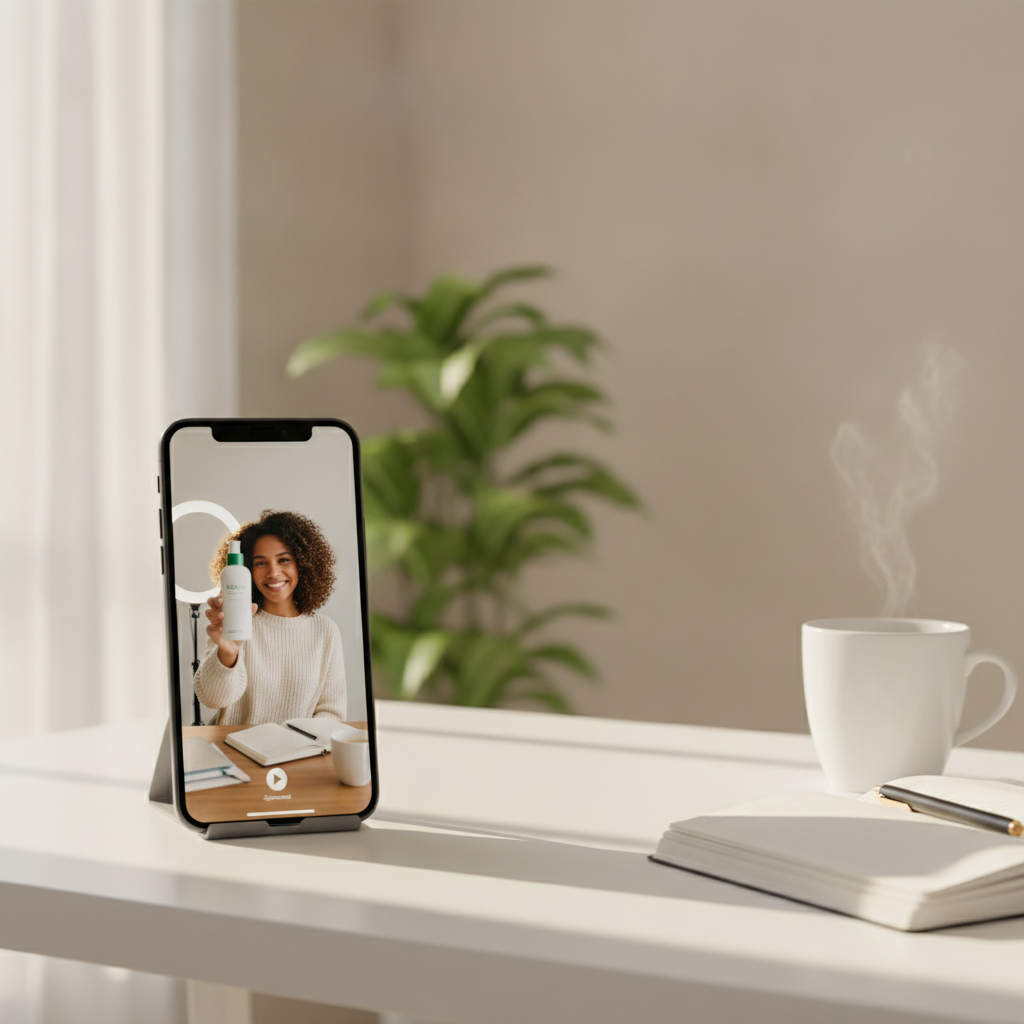
If you have scrolled through your feed lately, you have probably paused on a video of a regular person talking into their phone about a product they actually use. No studio lighting, no scripted voiceover, no polished brand jingle. That is user generated content, and when it is used in paid campaigns, it becomes ugc facebook ads, one of the most effective creative formats on the platform today.
Why does this format work so well? Because people have become experts at ignoring traditional advertising. We scroll past banners, skip pre-roll videos, and tune out anything that looks like a commercial. But we stop for content that feels like a recommendation from a friend. That subtle shift in perception is the entire reason agencies are building their creative strategies around UGC.
In this guide, we will break down exactly what UGC is, how it differs from influencer marketing and traditional ads, and why agencies lean on it so heavily. We will also cover how to brief creators, which formats perform best, how to measure results, and the mistakes that quietly drain ad budgets. Whether you run a small business, build products as a developer, or simply want to understand how modern advertising really works, this article gives you a practical, plain-English roadmap to using UGC with confidence.
What Is UGC and Why Do UGC Facebook Ads Work So Well?
UGC stands for user generated content. It is any video, photo, review, or testimonial created by a real person rather than by a brand’s in-house creative team. When a business takes that content and runs it as a paid placement, you get ugc facebook ads. The content looks native to the feed, feels personal, and carries the credibility of a genuine customer experience. For related information, see Facebook business agency.
The reason this approach works comes down to trust. Audiences have learned to spot a polished advertisement within a fraction of a second, and they react by scrolling faster. A shaky, handheld clip of someone unboxing a product or explaining how a service solved a problem looks like organic content, so it earns more attention. Many teams working with a Facebook business agency discover that swapping one glossy brand video for a handful of authentic creator clips can noticeably lower cost per click and improve watch time.
How UGC Facebook Ads Lower Costs and Boost Conversions
The practical outcome agencies chase is simple: better results from the same budget. UGC tends to improve three core metrics at once. First, thumb-stop rate, meaning how many people pause on the ad. Second, click-through rate, because authentic messaging gives viewers a believable reason to learn more. Third, conversion rate, since social proof reduces the hesitation that stops people from taking the next step. For related information, see sales funnel development.
There is also a cost advantage on the production side. A traditional commercial shoot can require crews, locations, equipment, and weeks of editing. A UGC video can be produced by a creator at home in a day or two, often for a fraction of the price. That means teams can test more concepts, find winners faster, and retire losers without a painful sunk cost. When you can afford ten creative variations instead of one, the odds of finding a high performer rise sharply. And because Meta’s delivery system rewards fresh creative, a steady supply of UGC helps fight ad fatigue, which is one of the biggest hidden drivers of rising acquisition costs.
How Do Agencies Actually Use UGC Facebook Ads in a Funnel?
Agencies rarely treat UGC as a standalone trick. They fit it into a full funnel where each piece of content has a job. At the top of the funnel, short hook-driven videos introduce the problem and the product to a cold audience. In the middle, longer testimonials and demonstration clips build understanding and credibility. At the bottom, retargeting ads use reviews, before-and-after stories, and objection-handling clips to nudge people who already showed interest. For related information, see book a strategy session.
This is where creative strategy connects with the broader journey a customer takes. A great ad that sends people to a weak landing experience wastes money, which is why many teams pair their creative work with sales funnel development so the message in the ad matches the page, the offer, and the follow-up sequence. When the promise made by a creator in the video is repeated on the landing page, visitors feel continuity, and continuity converts. Agencies track each stage separately so they know whether a problem sits in the creative, the offer, or the destination.
UGC vs Influencer Content vs Traditional Ads
People often confuse UGC with influencer marketing, but they serve different goals. Influencer marketing borrows an established personality’s audience and reputation. UGC borrows only the creator’s voice and authenticity, and the ad runs from your own account to your own targeted audience. You do not need the creator to have followers at all, which makes the pool of available talent far larger and the pricing far more accessible.
Traditional ads, by contrast, are brand-controlled, scripted, and polished. They still have a place, especially for brand awareness and premium positioning, but they often underperform in performance-focused campaigns. The table below shows the key differences at a glance.
| Factor | UGC Ads | Influencer Ads | Traditional Ads |
|---|---|---|---|
| Production cost | Low | Medium to high | High |
| Feel | Authentic and native | Personality-driven | Polished and scripted |
| Speed to produce | Days | Weeks | Weeks to months |
| Best use | Testing and performance | Reach and credibility | Brand awareness |
The Most Effective Types of UGC Facebook Ads
Not all UGC looks the same, and agencies deliberately mix formats to see what resonates. The most common type is the testimonial, where a creator shares a genuine result or experience. Next is the unboxing or first-impression video, which works well for physical goods and also for software onboarding walkthroughs. Then there is the problem-solution format, where the creator opens with a frustration the audience recognizes and shows how the product resolves it.
Other high-performing formats include the demonstration, where a creator walks through exactly how something works, and the reaction or review style, which feels spontaneous and unscripted. For developers and software teams, screen-recorded walkthroughs narrated by a real user can be especially persuasive because they show the product in action instead of describing it. Static formats also work, including screenshots of real reviews, customer messages, and quote cards. The key is that every format should feel like something a real person would plausibly post, not something a marketing department engineered.
Where Do Brands Find UGC Creators?
There are several reliable sources for creators. Dedicated UGC marketplaces connect brands with vetted creators who already understand the format and deliver in a few days. Freelance platforms let you browse portfolios and negotiate directly. Social platforms themselves are also a goldmine, since you can reach out to people who already post honest product reviews in your category.
Another strong source is your own customer base. Happy customers can be invited to submit short clips in exchange for a discount, a free product, or a modest payment. Always secure written usage rights before running anything as an ad, since permission to post organically is not the same as permission to promote. Agencies typically maintain a bench of trusted creators across different demographics, so they can match the person to the audience quickly. When vetting talent, look for clear audio, natural delivery, good lighting, and a style that suits your brand voice. A creator with strong on-camera presence and a handful of previous brand collaborations is usually a safer investment than a bargain-priced newcomer.
How to Brief Creators for Better Ads
A good brief is the difference between usable footage and wasted money. Start with the goal: what should the viewer feel or do after watching? Then describe the audience, the main pain point, the single most important benefit, and the call to action. Keep the structure simple: a hook in the first three seconds, a short story or demonstration, proof, and a clear next step.
Avoid over-scripting. The magic of UGC is that it sounds natural, so give the creator talking points rather than a word-for-word script. Share a few examples of the tone you like, list claims they must avoid for compliance reasons, and request multiple hooks for the same video so you can test openings. Ask for raw footage in vertical format, with captions-ready audio and a few seconds of extra footage at the start and end for editing flexibility. Finally, set expectations for revisions and delivery dates in writing, so the process stays smooth for both sides.
Creative Testing and Measurement for UGC Facebook Ads
Running UGC without a testing plan is like cooking without tasting. Agencies usually test one variable at a time: the hook, the creator, the format, or the offer. Launch several variations in the same campaign, give each enough spend to gather meaningful data, and then scale the winners while pausing the weak performers.
- Thumb-stop rate, which shows how well the opening hook grabs attention.
- Hold rate and average watch time, which reveal whether the story keeps people engaged.
- Click-through rate, which measures how persuasive the message and call to action are.
- Cost per acquisition and return on ad spend, which show whether the ad is profitable.
Look at these metrics together rather than in isolation. An ad with a great click-through rate but poor conversions may point to a landing page problem, not a creative problem. Refresh creative regularly, because even strong ads fatigue as the same audience sees them repeatedly.
Common Mistakes to Avoid With UGC Facebook Ads
The biggest mistake is over-polishing. Teams receive authentic footage and then add heavy graphics, stock music, and slick transitions until it looks like a regular commercial again. That destroys the very quality that made it effective. Keep editing light: captions, a clean cut, and maybe a subtle logo at the end.
Another common error is relying on a single creator or a single video. Audiences differ, and what resonates with one group may fall flat with another. Diversify your creator pool and your hooks. Teams also forget about compliance, making exaggerated claims or using testimonials that imply guaranteed results, which can trigger ad rejections or account restrictions. Skipping usage rights is another costly oversight. Finally, many advertisers ignore the post-click experience. Even the best ugc facebook ads cannot rescue a slow, confusing, or mismatched landing page, so audit the whole journey before increasing spend.
Is UGC Right for Your Business Model?
UGC is not limited to consumer products. B2B services, software tools, consultancies, coaching programs, and info-product brands all use it successfully. A client describing how a service saved them ten hours a week, or a developer explaining why a tool fits into their workflow, carries real weight with decision-makers who are tired of marketing language.
Before committing, ask yourself a few questions. Do you have a clear value proposition that a regular person can explain in plain words? Can you gather genuine feedback or experiences to build content around? Do you have the budget and patience to test several variations? If the answers are yes, UGC deserves a place in your mix. If your offer is highly complex or technical, pair creator content with explainer visuals so viewers still understand what they are buying. Start small, learn quickly, and expand what works.
Your Next Steps
UGC has earned its place at the center of modern paid social because it solves a problem every advertiser faces: audiences no longer trust polished messaging the way they once did. Authentic voices, real experiences, and natural delivery cut through the noise, and ugc facebook ads give businesses a faster, cheaper, and more believable way to reach new customers. Agencies favor the format because it supports rapid testing, fights creative fatigue, and fits neatly into every stage of the funnel.
To get started, pick one product or service, recruit two or three creators, brief them with clear talking points rather than rigid scripts, and launch a small test with several hooks. Watch your thumb-stop rate, click-through rate, and cost per acquisition, then double down on what works. Keep your editing light, secure your usage rights, and make sure your landing experience delivers on the promise made in the ad.
If you would rather have experienced hands guide the process, from creator sourcing to testing frameworks and scaling, you can book a strategy session and map out a plan tailored to your goals. The brands winning on Facebook today are not the ones with the biggest production budgets. They are the ones who sound the most human, test the most ideas, and keep learning from every dollar spent.

