
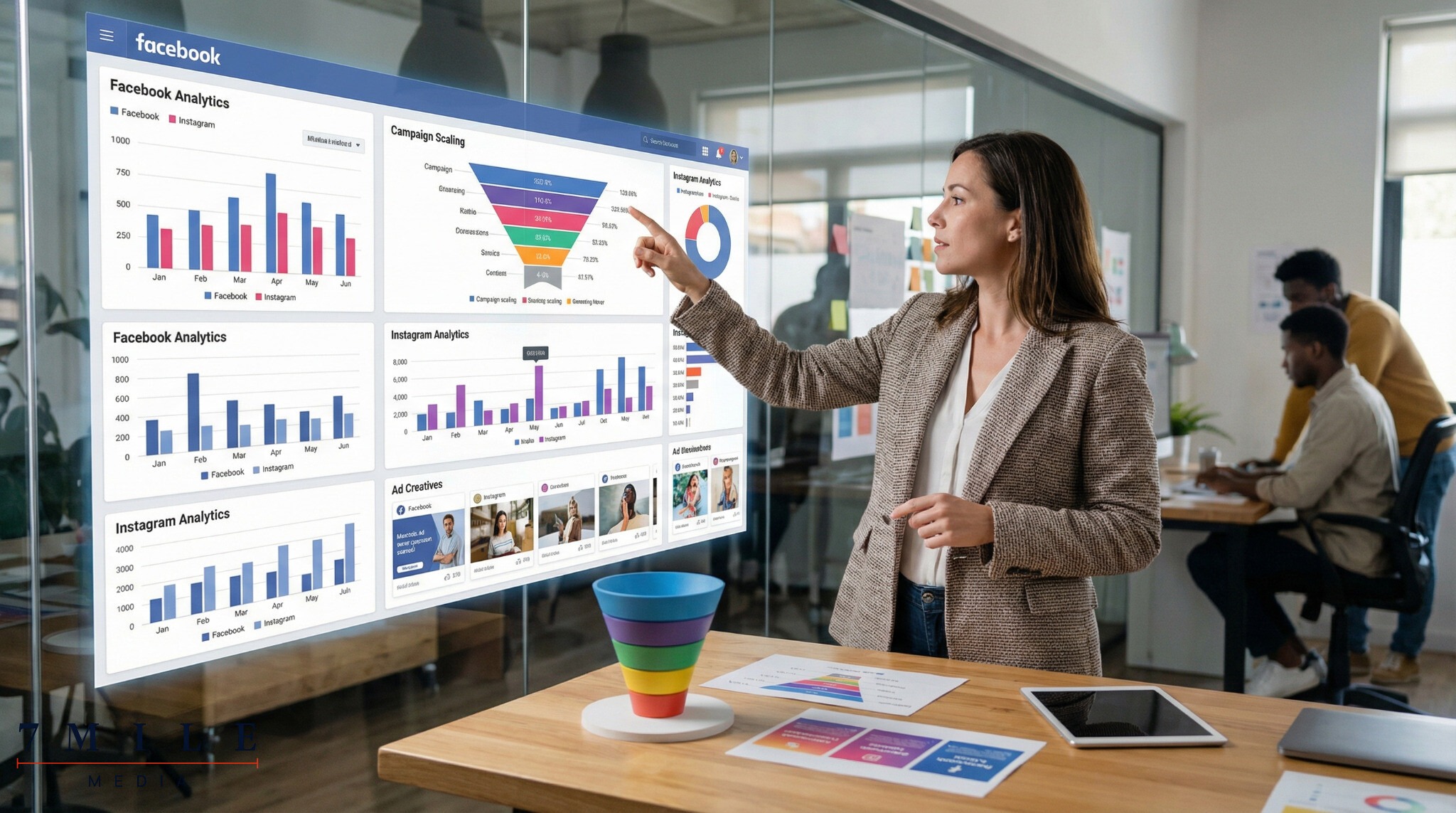
Introduction: The Power of Data-Driven Advertising Campaigns
In today’s digital marketing landscape, data-driven advertising campaigns are the backbone of any successful performance strategy. Platforms like Facebook and Instagram, with their vast audiences and sophisticated analytics, offer unparalleled opportunities for brands to reach, engage, and convert customers. Yet, achieving maximum ROI requires more than just setting up ads—it demands a strategic, data-informed approach to scaling, measurement, and creative optimization.
Understanding Platform Differences: Facebook vs Instagram
Both Facebook and Instagram are essential components of a robust data-driven advertising strategy, but each serves unique roles within the marketing funnel. Facebook’s audience skews older, favoring detailed content and offering a fertile ground for industries such as services, finance, and real estate. Its mature, intent-driven users respond well to lead generation and conversion-focused ads. Instagram, on the other hand, excels with younger users who gravitate to visual content, trends, and impulse discovery. It thrives on Reels, Stories, and influencer campaigns. Recognizing these behavioral and demographic differences is crucial for tailoring campaign objectives and optimizing ad formats for maximum effectiveness.
Proven Strategies for Scaling Facebook Ads
Scaling Facebook ads effectively is a balance between expanding reach and maintaining a strong return on ad spend. There are two primary approaches:
- Vertical Scaling: Incrementally increase the budget on high-performing ad sets. Use data to guide budget increases, monitoring for signs of ad fatigue or diminishing returns. Employ Facebook’s learning phase insights and split testing to optimize spend allocation.
- Horizontal Scaling: Broaden your audience by creating new lookalike segments, expanding geographic targeting, and duplicating successful ad sets. Diversifying audiences helps prevent saturation and drives incremental growth while maintaining efficiency.
To avoid ad fatigue, regularly refresh your creative assets. Tailor visuals and messaging to each stage of the funnel and to specific placements—utilizing square images for feed placements and vertical videos for Stories. Assign granular budgets to different audience segments and be prepared to shift spend dynamically based on real-time performance data.
Building Integrated Sales Funnels
A high-ROI, data-driven advertising campaign on Facebook and Instagram should follow a full-funnel approach. Start by capturing attention with engaging video content, then move audiences through the funnel with precise retargeting strategies. Segment retargeting audiences by engagement level, site visitation, or purchase activity, and match creative messaging to each segment’s intent. This allows for granular budget allocation and optimal conversion rates at every stage.
Measuring and Optimizing ROI on Instagram
Instagram marketing ROI is multifaceted, encompassing direct sales and indirect outcomes such as brand engagement and influencer impact. Accurate campaign measurement is challenging due to multi-touch attribution and privacy restrictions, but it is essential for data-driven campaign scaling. To maximize ROI:
- Align campaign goals with audience intent and customer journey stages.
- Unify KPIs across paid, organic, and influencer initiatives to get a complete picture of Instagram’s contribution.
- Audit attribution and tracking workflows—ensure UTM tags are in place, and leverage first-party data and social analytics for holistic reporting.
- Implement continuous creative testing and content optimization using actionable insights from platform analytics or third-party tools.
Tools like Sprout Social can automate reporting, unify cross-channel performance data, and make tracking both direct and indirect ROI more transparent, freeing up time for strategic decision-making.
Best Practices for Data-Driven Campaign Scaling
- Embrace AI-Driven Optimization: Both Facebook and Instagram increasingly leverage AI to make data-driven recommendations that enhance ad relevance and conversion rates. Use these insights to guide budget allocation, creative rotation, and audience expansion strategies.
- Adopt a Full-Funnel Mindset: Use Facebook for cost-effective lead generation and conversions, while Instagram should anchor your top-of-funnel engagement and discovery efforts. Integrating both platforms maximizes visibility, retargeting efficiency, and overall campaign ROI.
- Combat Ad Fatigue with Creative Variation: Routinely test and refresh creatives tailored to placement and audience segment. This reduces the risk of performance declines and keeps campaigns dynamic.
Conclusion: Driving Sustainable Growth with Data-Driven Advertising
Scaling data-driven advertising campaigns on Facebook and Instagram is both an art and a science. By understanding the unique strengths of each platform, adopting proven scaling strategies, and rigorously measuring ROI, brands can unlock sustainable growth and maximize returns on every advertising dollar. For digital marketers and agencies alike, the path to greater ROI starts with actionable data, agile execution, and the willingness to continually test, learn, and optimize.

