
Introduction: Why Facebook Ads Matter for Ecommerce Success
Facebook ads for ecommerce remain one of the most effective digital marketing solutions for scaling online stores quickly. With Meta’s robust targeting capabilities, creative ad formats, and evolving automation tools, ecommerce brands can build powerful funnels that drive traffic, conversions, and repeat sales.
Whether you’re an experienced marketer or new to online advertising, optimizing Facebook ad campaigns with a data-driven approach is the key to maximizing your return on ad spend (ROAS) and building sustainable growth.
Build a Strong Foundation: Funnel Planning, Pixel Setup, and Buyer Personas
Success begins before you launch your first campaign. Start by mapping out your conversion funnel—identifying each stage from awareness to purchase and post-purchase engagement.
- Facebook Pixel Setup: Ensure your pixel is correctly installed to track user actions and feed accurate data back to Ads Manager. This enables custom audiences, retargeting, and effective conversion optimization.
- Define Buyer Personas: Go beyond basic demographics; segment by interests, pain points, and buying motivations. For example, segment cart abandoners for retargeting with special offers, and reward repeat buyers with exclusives.
A performance marketing agency often starts with these fundamentals to ensure every dollar spent is measurable and impactful.
Audience Targeting: Segment, Broaden, and Let the Algorithm Learn
The days of hyper-segmentation are waning. Instead, start with broader audiences—targeting 2–10 million users—and use exclusions to refine your reach. This gives Facebook’s machine learning enough data to optimize delivery and conversion.
- Lookalike Audiences: Use past purchasers or high-value customers to create lookalike segments for scaling.
- Retargeting: Deploy Facebook retargeting ads to re-engage recent visitors, cart abandoners, or users who interacted with specific products.
- Dynamic Product Ads: Personalize your ads automatically based on user behavior, showcasing the products they engaged with most.
Effective audience segmentation is at the heart of data-driven marketing strategies, producing higher conversion rates and better ROAS.
Creative Strategy: Test Boldly and Leverage User-Generated Content
Creative is the single biggest lever in paid social success. Use a mix of images, videos, carousels, and stories—optimized for mobile viewing—to capture attention. Techniques that perform well include:
- Thumb-Stopping Hooks: Open with bold, curiosity-driven visuals or statements.
- User-Generated Content (UGC): Authentic customer reviews, unboxing videos, and testimonials can boost click-through rates by up to 300% and lower acquisition costs by 50% compared to traditional creative.
- Dynamic Creative Optimization (DCO): Let Facebook automatically test combinations of headlines, images, and CTAs to find the best performing variations.
- Storytelling Ads: Share founder stories, product journeys, or real-life use cases to build trust and engagement.
Regular creative refreshes and continuous A/B testing are essential for avoiding ad fatigue and keeping your campaigns competitive.
Campaign Structure and Budget Management: Optimize for Learning and Scale
Structure your ad account to avoid internal competition and maximize learning.
- Group similar products together in single campaigns, creating new ad sets only for distinctly different targets.
- Start with Ad Set Budget Optimization (ABO) for initial learning; graduate to Campaign Budget Optimization (CBO, now called Advantage+ Shopping Campaigns) as you scale.
- Scale budgets gradually—no more than a 10% daily increase—to ensure algorithm stability and consistent performance.
Let your campaigns complete the “learning phase” (about 50 conversions per ad set), as abrupt changes can reset optimization, increasing costs and lowering conversion rates.
Data-Driven Optimization: Test, Measure, and Iterate
Monitor key performance metrics—conversion rate, ROAS, cost per acquisition (CPA), and customer lifetime value (LTV). Compare your results against industry benchmarks:
- General ecommerce averages 1%–3% conversion rates on Facebook ads, with top-performing niches (like health or apparel) reaching 4% or higher.
- Track your data using UTM parameters, Facebook Analytics, and Google Analytics for full-funnel visibility.
- Leverage automated rules for budget increases or pausing underperforming ad sets.
A performance marketing agency relies on these data-driven marketing strategies to deliver consistent growth and rapidly adapt to market trends.
Leverage Automation and AI Tools for an Edge
Platforms like Facebook’s own Advantage+ and third-party solutions provide automation for audience targeting, creative optimization, and bid management. AI-driven platforms can:
- Identify high-value audience segments automatically
- Optimize creative in real time
- Streamline full-funnel campaign setup, minimizing manual workload
Implementing these tools is especially valuable as privacy updates and algorithm changes make manual campaign management more challenging.
Best Practices for Facebook Ad Funnel Setup
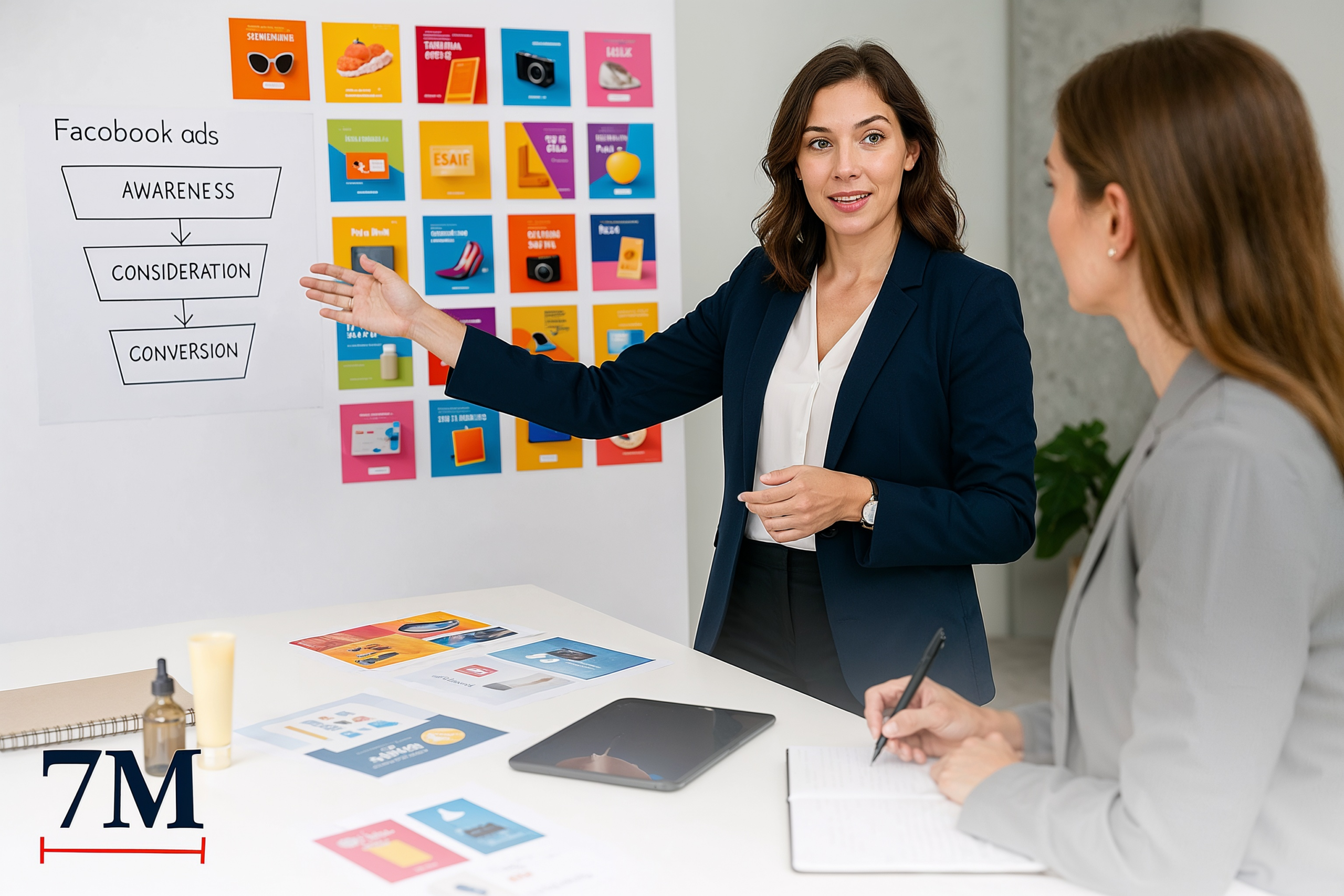
Structure your campaigns to guide customers through:
- Awareness: Use video and engaging imagery to introduce your brand to new audiences.
- Consideration: Deploy educational content, reviews, and targeted carousel ads to build interest.
- Conversion: Offer exclusive discounts, limited-time offers, or convincing user testimonials to seal the deal.
- Post-Purchase: Run retargeting campaigns for upsells, cross-sells, and loyalty programs to boost LTV.
Track the customer journey using the Facebook Pixel and tie campaign events to real business outcomes.
Conclusion: Continuous Improvement for Lasting Growth
Optimizing Facebook ads for ecommerce is a continuous process of creative testing, data analysis, and strategic scaling. By combining the right foundation, audience strategies, creative innovation, and automation, your ecommerce brand can exceed industry benchmarks and build a sustainable growth engine.
Partnering with a performance marketing agency or adopting advanced data-driven marketing strategies will maximize your chances for scalable success in an ever-evolving digital landscape.

