
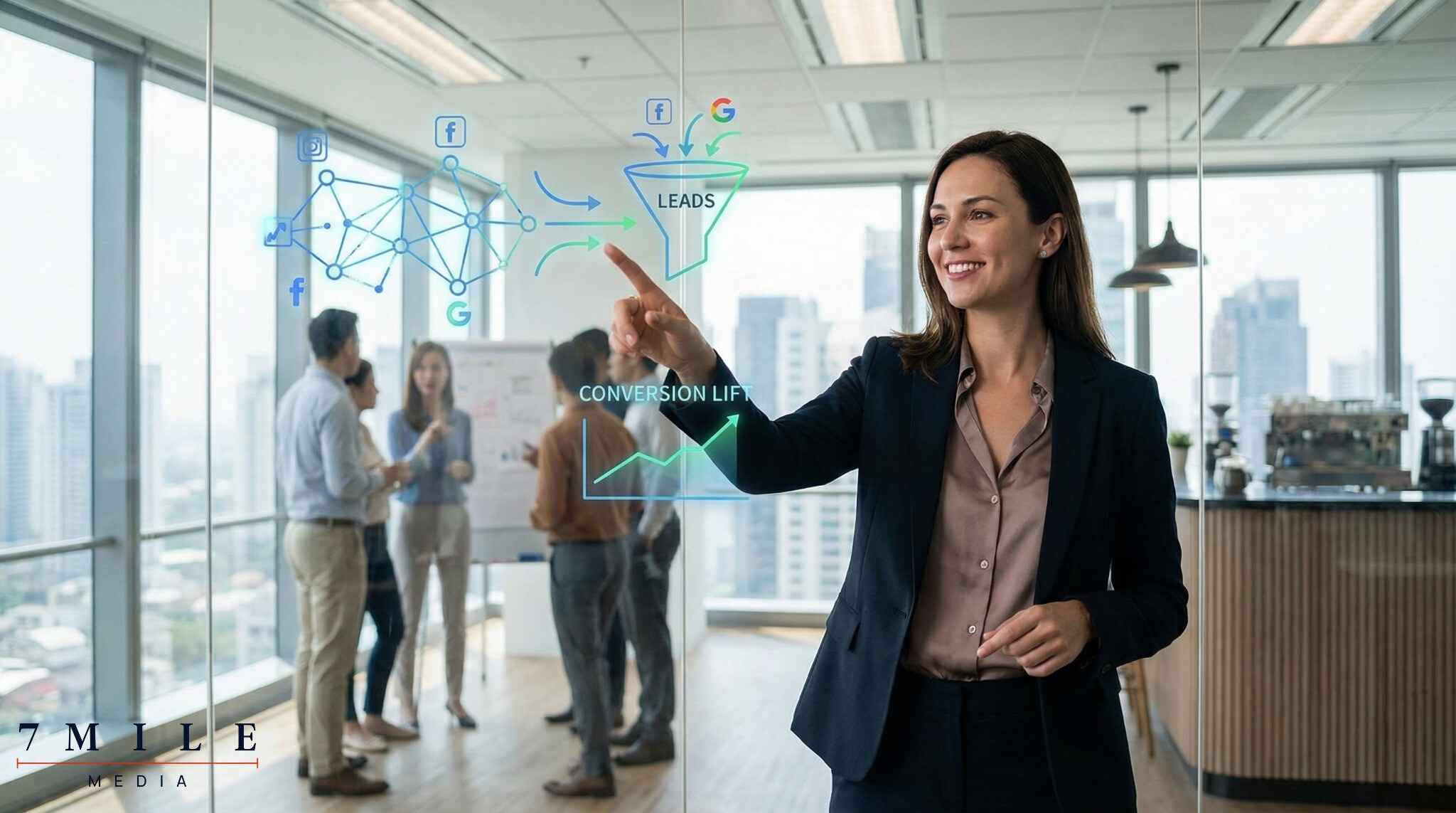
Introduction: The Power of Paid Ads for Service Businesses
Service businesses face a unique challenge in today’s digital marketplace: they must generate a consistent stream of high-quality leads while keeping acquisition costs under control. With the right blend of Facebook and Google ads for service businesses, agencies and owners can unlock both immediate conversions and sustainable brand growth. This guide will show how to integrate these two dominant platforms into a data-driven strategy that maximizes returns, minimizes waste, and puts your brand in front of the right customers at the right time.
Understanding Platform Roles: Intent vs. Interest
Google Ads and Facebook Ads each play a distinct role in the service business marketing funnel. Google Ads targets users who are actively searching for solutions—think urgent needs like “plumber near me” or “best divorce lawyer.” These high-intent prospects are often ready to take action, resulting in higher conversion rates and a faster sales cycle.
Facebook Ads, in contrast, focus on audience discovery and nurturing. With advanced demographic, interest, and behavior targeting, you can reach people before they search, raise brand awareness, and retarget visitors who have already shown interest. By using both platforms together, you can capture high-intent traffic on Google while keeping your brand top-of-mind and nurturing leads on Facebook.
Google Ads: Capturing Ready-to-Convert Service Leads
For service businesses, Google Ads provide a direct path to customers who are seeking solutions right now. Recent advancements, such as Performance Max and AI Max for Search campaigns, enable cross-channel visibility across Search, Display, YouTube, and Maps, all managed through automation. This has led to conversion increases of up to 27% at similar cost per acquisition (CPA).
Key strategies for Google Ads optimization include:
- Intent-Driven Keywords: Build campaigns around high-intent, local, or urgent keywords specific to your services.
- Optimized Landing Pages: Tailor landing pages to reflect user intent, streamline conversion paths, and highlight trust signals like reviews, certifications, and guarantees.
- Negative Keyword Management: Exclude irrelevant search queries to improve Quality Score and lower CPC.
- Performance Benchmarks: Average cost per click (CPC) is around $5.26, with conversion rates exceeding 7.5% and cost per lead near $70 for service businesses. High Quality Score can reduce CPC by up to 50%.
- Local Services Ads (LSA): For many service businesses, LSAs offer top-of-search placement, verified trust, and direct booking—especially effective for local providers.
Facebook Ads: Nurturing and Retargeting Leads
Facebook and Instagram offer unmatched capabilities for driving top- and mid-funnel engagement. With Meta’s automation features, including Advantage+ campaigns, you can leverage AI-powered optimization for creative placements, audiences, and bid strategies. Custom and lookalike audiences allow precise retargeting of prior website visitors, lead form submissions, or even video viewers.
Best practices for Facebook Ads targeting include:
- Audience Segmentation: Use granular targeting—interests, behaviors, life events—to reach the right people at the right time. Custom and lookalike audiences are powerful for retargeting and expanding reach.
- Creative Variety and Refreshes: Rotate ad creatives (video, carousel, lead forms) every 2–3 weeks to avoid “ad fatigue” and maintain strong performance.
- Lead Generation Tools: Facebook lead forms and automated Messenger chatbots can qualify leads instantly and integrate seamlessly with your CRM for rapid follow-up.
- Performance Metrics: Typical CPCs range from $0.70 to $1.92, with cost per lead averaging $27.66, and conversion rates near 8.8%—making Facebook highly cost-effective for brand awareness and retargeting.
Integrated Strategy: How to Split Budgets and Optimize for Maximum ROI
The most successful service businesses approach Facebook and Google ads as complementary parts of a full-funnel lead generation engine. Start by allocating 70% of your budget to Google Ads (for direct response and high-intent leads) and 30% to Facebook (for nurturing, branding, and retargeting). Let the data guide ongoing adjustments—shift spend toward the platform or campaign that delivers the best cost per lead and highest quality prospects.
Key steps to maximize synergy:
- Cross-Platform Attribution: Use Meta Pixel, Google Tag, GA4, and UTM tracking to measure true ROI across platforms. This ensures you do not double-count leads and can align ad spend to actual conversions.
- Unified KPIs: Compare cost per lead, conversion rate, and return on ad spend (ROAS) side-by-side for both platforms. Adjust creative, bidding, and targeting based on these shared metrics.
- Testing and Iteration: Regularly A/B test ad creatives, landing pages, and audience segments on both platforms. Use learnings from one channel to improve the other.
- Rapid Lead Follow-Up: Integrate leads from both channels into your CRM and automate immediate outreach (calls, texts, emails) to maximize speed-to-lead and conversion rates.
Case Studies: Real-World Examples of Scalable Growth
Consider the case of a local financial services provider that combined Google Ads for high-intent “mortgage advice” searches with Facebook retargeting of website visitors. By segmenting audiences and optimizing landing pages, the business increased qualified lead volume by 35% and reduced overall cost per acquisition by 19%.
Meanwhile, a coaching center used Facebook video ads to raise brand awareness in local communities, then captured ready-to-book prospects via Google Local Services Ads. The result: a 4X increase in enrollments within three months.
Emerging Trends and Best Practices
The landscape of lead generation for service businesses is rapidly evolving. Some of the most important trends to watch include:
- Conversational Marketing: Use chatbots and instant messaging (on Facebook Messenger and your website) to engage and qualify leads in real time.
- AI-Powered Campaigns: Performance Max (Google) and Advantage+ (Facebook) are replacing manual campaign structures. Learn to leverage automation for better targeting and creative testing.
- First-Party Data and CRM Automation: Collect and activate your own customer data for smarter scoring, remarketing, and campaign optimization.
- Video and Interactive Content: Short-form videos, quizzes, and calculators increase engagement and conversion rates and are easily repurposed across both ad platforms.
- Local SEO Integration: Optimize Google Business Profiles and generate reviews to support both organic and paid lead generation efforts.
Conclusion: Building a Profitable, Scalable Lead Engine
For service businesses, the winning strategy is not choosing between Facebook and Google ads—it is learning how to master both, using each platform’s strengths to drive high-value leads profitably. By aligning your objectives, continually optimizing campaigns, and embracing data-driven decision-making, you will turn your marketing into a scalable engine for growth.
Ready to take your service business to the next level? Integrate Facebook and Google ads for service businesses into a holistic, results-focused strategy—and watch your lead pipeline grow.

