
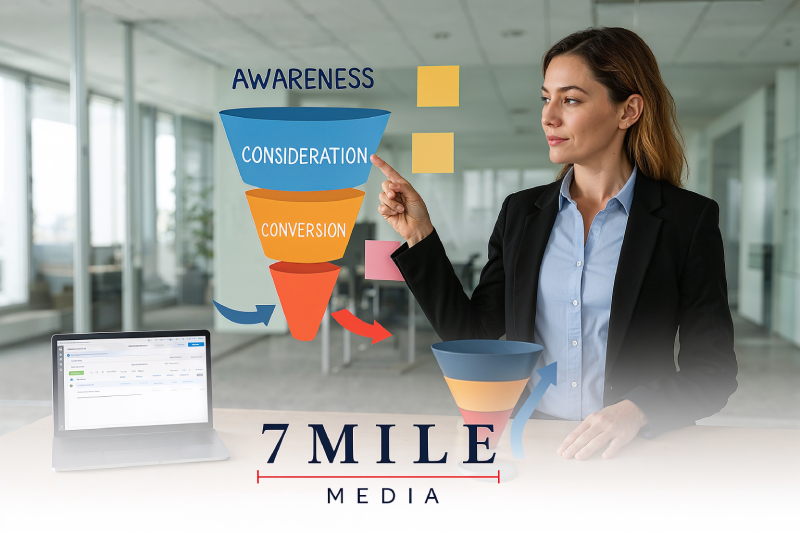
In today’s rapidly evolving digital ecosystem, an expertly-crafted facebook ad funnel setup is the linchpin of scalable direct response marketing. 7 Mile Media SEZC, a leader among performance marketing agencies, leverages this strategic approach to maximize ROI, nurture leads, and convert prospects into loyal customers. This comprehensive guide distills proven methods and data-driven marketing strategies to build, optimize, and scale your Facebook ad funnel for sustained growth in 2025 and beyond.
The Facebook ad funnel isn’t just a linear path—it’s a dynamic journey designed to engage, nurture, and convert at every stage. Let’s break down the core stages and their objectives:
Before a single ad goes live, define your ideal customer using demographic, geographic, and psychographic data. Build detailed buyer personas, then map out the customer journey, aligning offers and messaging with each funnel stage. As a performance marketing agency, 7 Mile Media SEZC emphasizes audience segmentation as the foundation of successful funnel builds.
Accurate data is the backbone of data-driven marketing strategies. Install the Meta Pixel on your website to track user actions, create custom audiences, and optimize campaigns based on real conversions. Enhance tracking capabilities with Facebook’s Conversions API, ensuring reliable server-side data, especially post-iOS privacy updates. Set up standard and custom events to measure key touchpoints at every funnel stage.
Always test multiple variants of creative, copy, and call-to-action to identify high performers. Systematic A/B testing is essential for funnel optimization and maximizing response rates.
Scaling your funnel requires balancing growth with performance:
Monitor KPIs such as ROAS, CPA, CTR, and conversion rates closely, adapting your strategy based on real-time data.
The true power of a well-architected facebook ad funnel setup lies in retargeting and nurturing:
Continuous optimization sets high-performing funnels apart. Regularly refresh creatives to combat ad fatigue, and use automation platforms to sync CRM and on-platform data for seamless lead nurture. Employ tools like LeadsBridge, ActiveCampaign, or HubSpot for advanced sync and workflow automation.
Key metrics to track include:
Leverage these insights to fine-tune your funnel and scale with confidence.
Brands like UNTUCKit and CUTS have mastered full-funnel Facebook strategies, employing brand-building at the top, high-value lead magnets in the middle, and aggressive retargeting at the bottom. Their continuous testing and audience segmentation are blueprints for success in 2025.
Effective facebook ad funnel setup is more than just running ads—it’s a strategic, data-driven process that blends creativity, analytics, and automation. By understanding each funnel stage, leveraging the right tools, and continuously testing, marketers and agencies can deliver scalable, high-ROI campaigns that drive real business growth.
Ready to elevate your direct response marketing? Partner with a performance marketing agency like 7 Mile Media SEZC to unlock the full potential of your Facebook funnels in 2025 and beyond.
 Aaron Parkinson