Unlocking Growth: How to Build a Data-Driven Multi-Channel Marketing Strategy for Direct Response Success
Why Multi-Channel Marketing Strategy is Essential in 2025
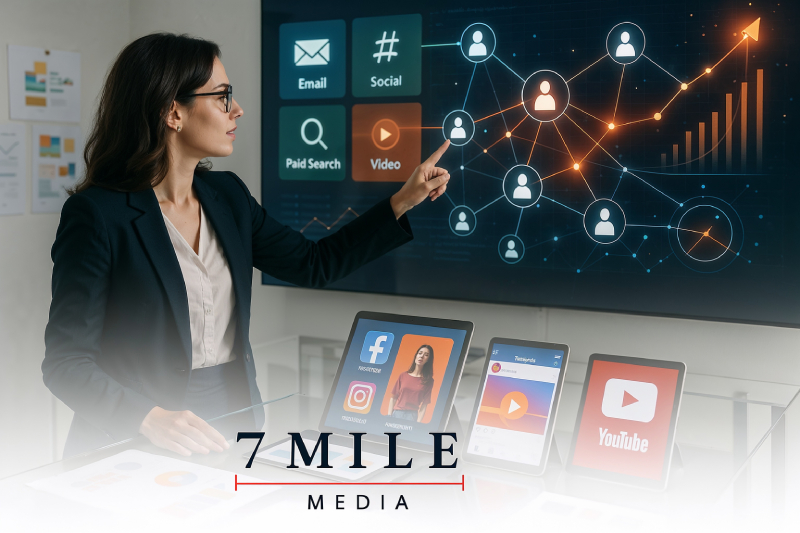
The digital marketing landscape is more fragmented—and more full of opportunity—than ever before. In 2025, potential customers may encounter a brand through dozens of touchpoints: Facebook and Instagram ads, YouTube pre-rolls, Google search and display, podcast mentions, emails, and even offline interactions. Relying on a single platform is no longer sufficient: a data-driven multi-channel marketing strategy is now the foundation for scalable direct response success and long-term business growth.
From Data to Direction: The Power of Integration
Modern performance marketing agencies know that effective digital marketing solutions start with data integration. CRM systems, web analytics, social media insights, and email tracking must all feed into a unified dashboard, creating a clear, actionable view of each customer’s journey. This cross-channel data is the key to understanding not just who your customers are, but how and where they prefer to engage.
- Integrate data sources (CRM, social, email, web analytics, call tracking) for a holistic customer view.
- Break down silos: unify marketing, sales, and customer service insights for consistent messaging and targeting.
- Leverage analytics to spot channel trends, segment audiences, and optimize spend in real time.
Crafting the Multi-Channel Blueprint: Step-by-Step
- Set SMART Goals: Define specific, measurable, achievable, relevant, and time-bound objectives for each channel and campaign. Direct response campaigns should have clear KPIs—leads, sales, ROAS, and CAC.
- Deep Audience Understanding: Use both quantitative data (demographics, clicks, conversions) and qualitative insights (feedback, call transcripts, chat analytics) to build dynamic buyer personas and predict behaviors.
- Select the Right Channels: Choose platforms based on audience habits and buying stage. For example, Facebook and Instagram drive awareness and nurture, while Google and YouTube often capture intent and conversions.
- Tailor Messaging Per Channel: Adapt creative and copy to each platform’s context—authentic and visual for Instagram, concise and compelling for Google ads, educational for YouTube.
- Map the Customer Journey: Design omni-channel flows that move users from awareness to action in logical, data-backed steps—using retargeting, sequential ads, and personalized landing pages.
- Continuous Optimization: Employ A/B tests, creative variations, and real-time analytics to refine every campaign element. Fail fast, learn faster, and scale what works.
The Role of AI and Automation in Multi-Channel Success
AI and automation are revolutionizing how brands execute and scale multi-channel campaigns. Machine learning algorithms can:
- Segment audiences dynamically based on real-time behavior.
- Personalize content and offers across every channel, increasing engagement and conversions.
- Automate bidding, budget allocation, and creative rotation for greater efficiency and ROI.
- Trigger immediate, relevant responses via chatbots or automated email flows, keeping prospects moving through the funnel.
For a performance marketing agency or any business invested in data-driven marketing strategies, AI not only improves results but frees up marketers to focus on creative and strategic tasks.
Solving the Biggest Multi-Channel Challenges
- Data Fragmentation: Invest in unified dashboards and regular reporting cadences. A single source of truth eliminates confusion and empowers faster decisions.
- Message Consistency: Standardize creative templates and brand guidelines, but optimize them for each channel’s unique vibe and audience.
- Attribution Complexity: Move beyond last-click models. Use multi-touch or W-shaped attribution to understand how each channel contributes to the conversion journey.
- Compliance & Privacy: Employ AI-enabled compliance tools and prioritize first-party data collection to ensure GDPR and CCPA readiness, especially when handling sensitive information.
Real-World Success: Putting Multi-Channel Strategies to Work
Brands large and small are seeing major results from integrated, data-driven campaigns. For instance:
- Replacing generic graphics with authentic, people-centric photography boosted click-through rates by up to 842%.
- Coordinated campaigns across Facebook, Instagram, and YouTube, combined with tailored retargeting and personalized emails, can lower acquisition costs by 70% and increase lead quality.
- Companies leveraging AI-driven segmentation and automation report up to 50% ROI gains and higher customer lifetime value.
Measuring What Matters: KPIs for Multi-Channel Marketing
Success depends on rigorous measurement. Key metrics include:
- Channel-level: CTR, CPA, ROAS, conversion rate
- Business-level: revenue, CAC, MQL/SQL rates, CLV, retention
- Engagement: time on site, email opens, video completions, social interactions
- Customer Satisfaction: CSAT, NPS, feedback scores
Future-Proofing Your Multi-Channel Strategy
The best multi-channel marketing strategy is one that adapts. As AI, privacy regulations, and customer expectations evolve, so must your approach. Invest in continuous learning, robust data infrastructure, and a test-and-learn mindset to stay ahead.
- Start with the highest-impact channels for your audience; scale as you gain traction and insight.
- Prioritize data-driven decision-making and automation for agility and efficiency.
- Never underestimate the power of personalization and unified brand voice across every touchpoint.
Unlocking growth in 2025 means transforming multi-channel chaos into cohesive, measurable, and scalable results—one data-driven decision at a time.
 Aaron Parkinson